Fishing in Venice has deep roots that date back thousands of years, shaping not only the economy but also the culture of the Venetian Lagoon.
The Venetian Lagoon was formed in the 7th century B.C. from a previous river-palustrine environment, and human settlements have always thrived here due to its abundance of natural resources, favoring hunting and fishing. Even before the Roman era, the region was home to well-established communities engaged in fishing, salt production, maritime transport, and trade.
At that time, Venice itself was merely a collection of small settlements, while neighboring centers such as Torcello and Metamauco (now the island of Malamocco) had far greater importance. By 452 A.D., these settlements were already self-sustaining, relying on fishing and salt extraction—an early example of what we now recognize as fishing in Venice as a vital livelihood.
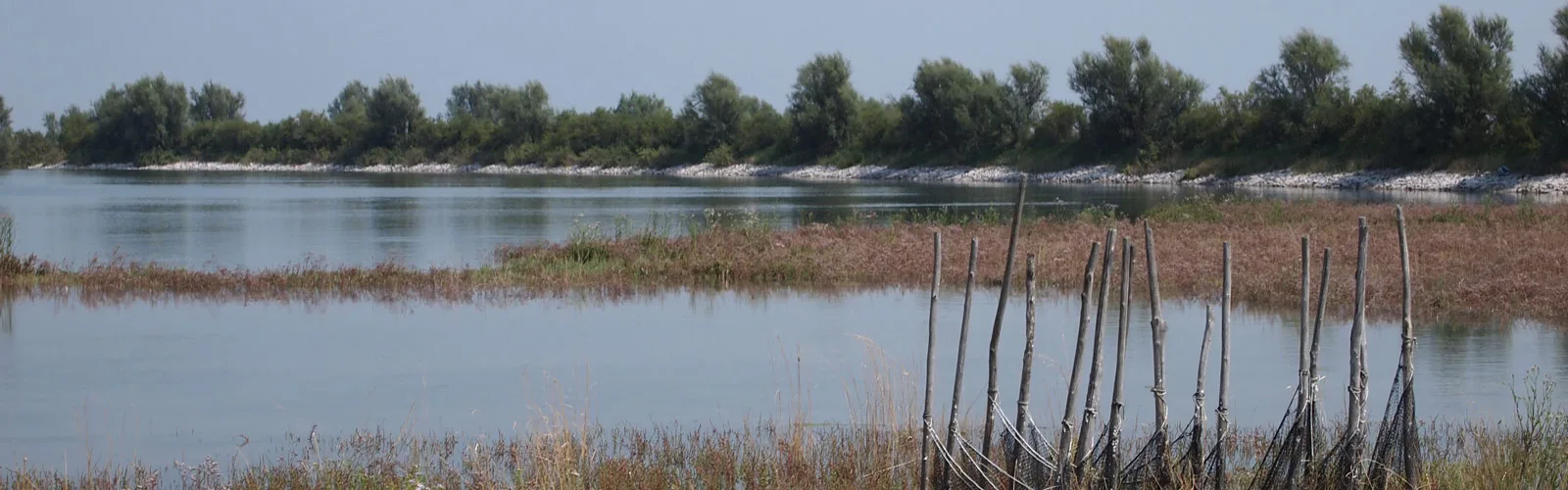
During the 11th century, the practice of Fishing Valleys was introduced. These areas of the Venetian Lagoon, enclosed by embankments and fences, became sites for “Vallicoltura”, a form of extensive fish farming. Fishing Valleys ensured self-sufficiency during crisis, and this traditional technique has been passed down through generations. The careful balance between land and water made it possible to fish sea bream, sea bass, and mullet sustainably.
There are various fishing methods in the lagoon, including Cuttlefish Fishing, which occurs twice a year (March–May and July–September). During these months, cuttlefish migrate from the Adriatic Sea to reproduce and lay eggs. Fishermen catch them from boats using a simple line and lead weight, known in Venetian dialect as “Togna”. Once caught, the cuttlefish are used to prepare “Pasta al nero di seppia”, a traditional Venetian dish made with their characteristic black ink.
Another traditional fishing method is clam harvesting, which in the past was carried out using a boat called “Purasara” and a special tool called “Porazzara”, a large scoop used to collect seabed sand and extract clams. During summer, long shoals of marshland appear in the Venetian Lagoon at low tide. Fishermen reach these temporary islands by boat, equipped with boots and gloves, and carefully search the seabed for clams.
Today, fishing in Venice continues to follow the rhythm of nature. The seasonality of fish depends largely on the life cycles of each species, ensuring that fish are not harvested before they have completed at least one reproductive cycle. Artisanal fishing is still widely practiced in both the sea and the lagoon, where Venetian fishermen serve as the true guardians of a millennia-old tradition. Their profound knowledge of the wetlands and delicate task of preserving fishing areas make them essential to maintaining the lagoon’s ecological balance, keeping alive the authentic spirit of fishing in Venice.
Contact us to discover Venice.